Philippine coastal logistics roads, warehouse access roads, and perimeter lanes need outdoor lighting that can tolerate humidity, salt air, heavy rain, and daily commercial traffic. For B2B buyers, the right solar LED street lights Philippines specification should balance lighting performance, corrosion resistance, battery autonomy, and after-sales support instead of focusing only on fixture wattage.
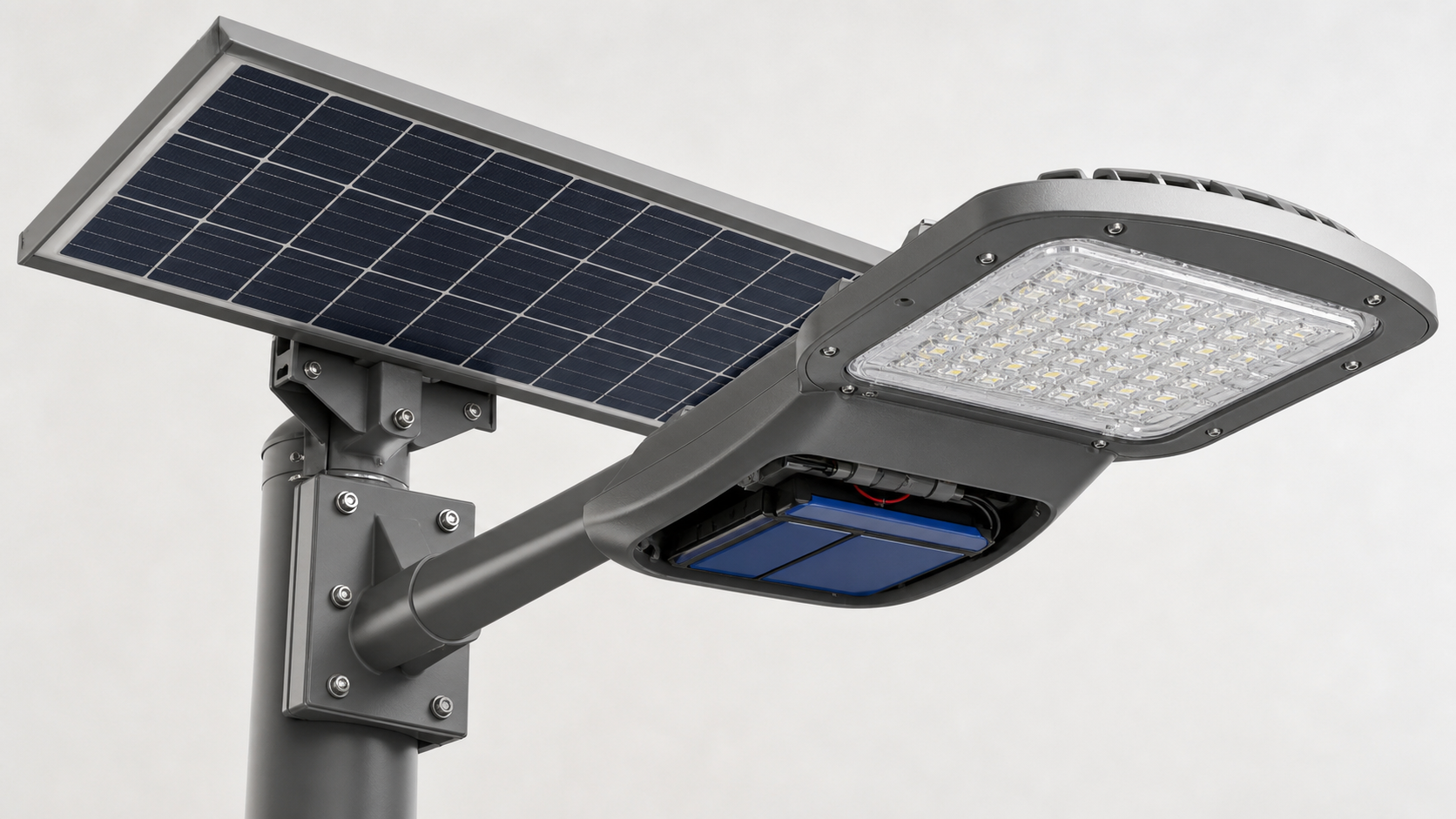
The Philippine Department of Energy highlights solar and other renewable resources as part of the country energy planning direction, while the Philippine Power Development Plan references renewable energy generation mix targets of 35% by 2030 and 50% by 2040. For private logistics parks, ports, factories, and local road projects, this makes solar street lighting a practical option where cable trenching, utility access, or phased site development would slow procurement.
At the regional level, the IEA Southeast Asia Energy Outlook 2026 reports rapid solar PV and wind growth from a low base and projects much larger renewable capacity under current policies and announced targets. Buyers should treat this as market context, not as a substitute for site engineering: each road still needs a lighting layout, pole plan, battery autonomy calculation, and maintenance plan.
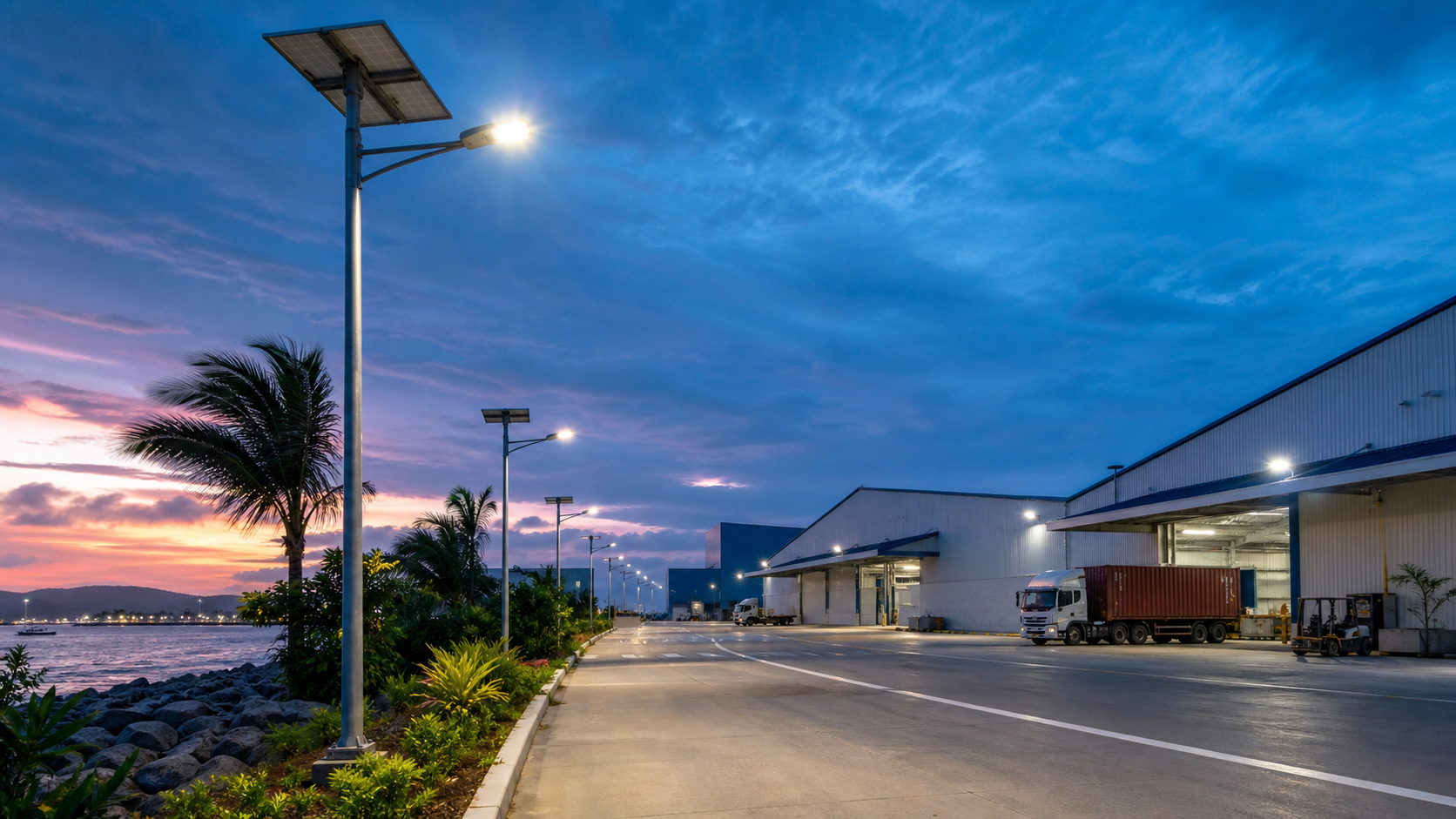
Before comparing factory quotations, ask each supplier for a project drawing, IES or photometric file when available, battery chemistry and capacity, solar panel wattage, controller logic, IP rating, housing material, pole recommendation, warranty terms, spare parts policy, and packing details. For multi-site logistics or industrial projects, also ask whether the same model can support different pole heights or dimming schedules.
Do not select a solar street light only by LED wattage. A lower-quality optical design can waste light outside the road, while an undersized battery can reduce lighting hours during rainy periods. Do not assume a generic inland fixture is suitable for ports, coastal warehouses, or humid industrial zones. Finally, do not omit installation details: foundation, pole verticality, panel orientation, and anti-theft fasteners all affect long-term performance.
Yes, when the system is specified for humidity, rain, salt-air exposure, road width, pole spacing, and required lighting hours. Coastal projects should prioritize sealed housings, corrosion-resistant hardware, and realistic battery autonomy.
IP65 is a common baseline for waterproof outdoor lights. Buyers should still review gasket design, cable entry protection, installation quality, and supplier test documentation.
Sometimes, but the lighting layout should confirm pole height, spacing, beam angle, and dimming schedule for each zone.
Guangzhou Vantone Science & Technology Co., Ltd. supports B2B buyers with solar LED street light, outdoor LED lighting, anti-glare court light, and factory direct LED lighting options for road, logistics, sports, and industrial projects. Send your road width, pole height, site location, working-hour target, and installation photos to request a practical project quotation.


