


A solar energy system is no longer only a panel array on a roof. For many B2B projects, buyers now compare the full solution: PV modules, inverter, mounting, protection devices, monitoring, installation accessories, and a solar energy storage system that can store power for later use. The solar energy storage battery is one of the most important parts of that decision because it affects backup time, safety, service life, usable capacity, and total project cost.
Recent energy-market analysis from the International Energy Agency shows that solar PV remains a central renewable power technology, while U.S. Department of Energy resources explain that storage helps hold solar electricity for use when solar generation is low or demand is high. The World Bank also highlights battery storage as an important tool for helping developing markets integrate more solar and wind while improving reliability. For importers, contractors, distributors, and project owners, the practical task is to turn these market trends into a clear buying specification.
Commercial and industrial users often need power after sunset, during peak demand periods, or when the grid is unstable. A solar energy system can reduce daytime electricity purchases, but a solar energy storage system can make the project more flexible by shifting energy to evening use, supporting backup loads, and improving self-consumption.
This does not mean every project needs the largest possible battery. A good system starts with load data, working hours, site conditions, and the buyer's business goal. A shop, school, clinic, warehouse, telecom room, farm, or factory office may all need different solar energy storage battery capacity and inverter design.
A commercial solar energy system normally includes PV modules, mounting structure, inverter, DC and AC protection, cables, connectors, monitoring, and installation accessories. When storage is required, the package may also include a battery cabinet or rack, battery management system, hybrid inverter or PCS, fire and ventilation considerations, communication wiring, and energy management controls.
Buyers should define whether the project is grid-tied, off-grid, hybrid, backup-focused, or self-consumption focused. This decision affects inverter selection, battery capacity, battery voltage, control logic, protection design, installation method, and quotation accuracy.
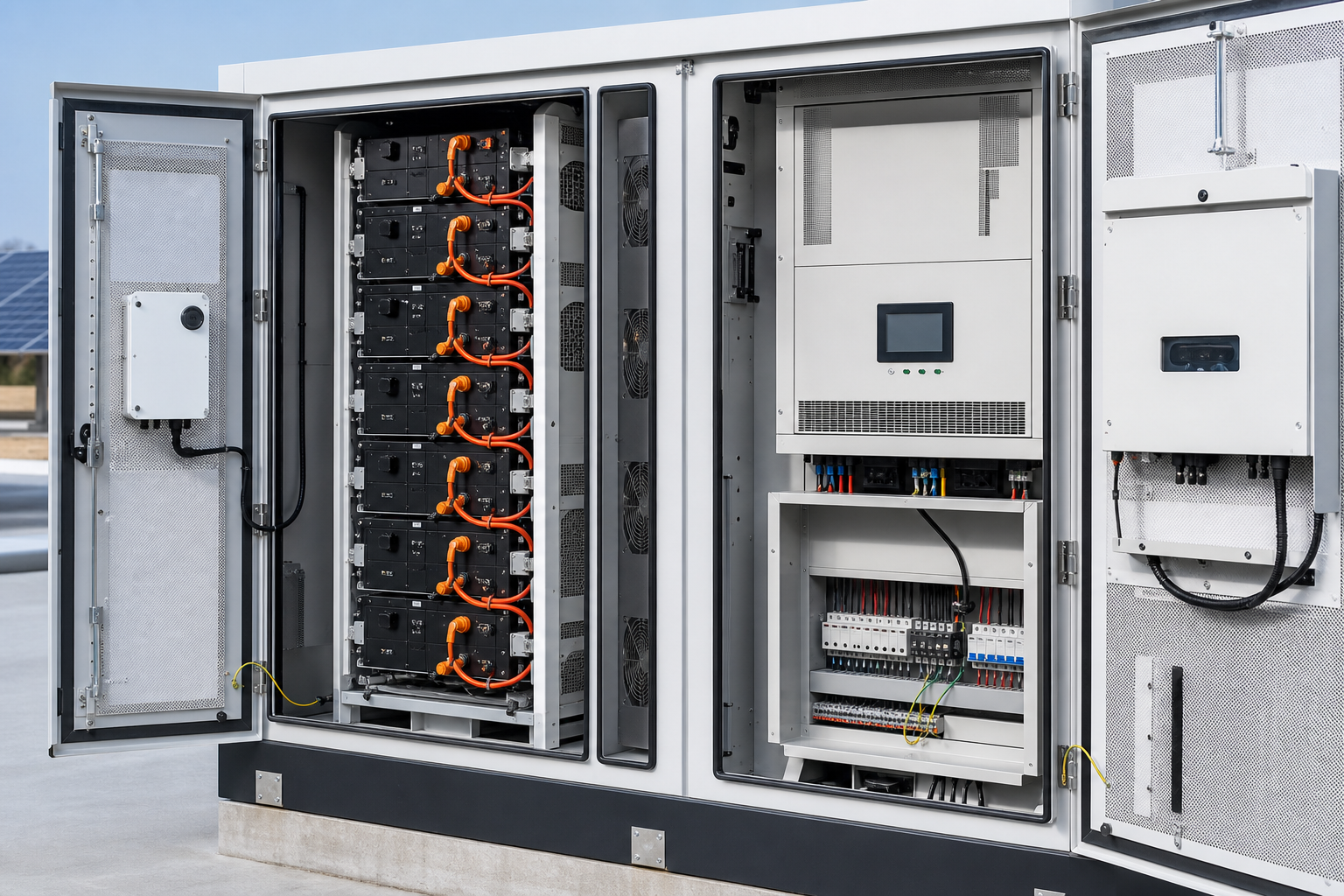
Before selecting a solar energy storage system, buyers should list daily energy use, peak power, critical loads, required backup hours, preferred operating mode, and whether the system must support expansion later. This information is more useful than asking only for a battery price.
The solar energy storage battery should be compared by usable capacity, depth of discharge, cycle life, operating temperature, warranty conditions, cabinet layout, and battery management protection. Nominal capacity alone can be misleading if the system has different discharge limits or operating rules.
The inverter, controller, battery voltage, BMS communication protocol, protection devices, and monitoring platform must work together. Compatibility is especially important for repeat orders, multi-site projects, and distributors that need stable documentation and spare-part support.
Outdoor or semi-outdoor projects need careful review of cabinet rating, heat dissipation, humidity, dust, cable entry, grounding, and maintenance access. High-temperature markets in Southeast Asia, the Middle East, Africa, and parts of the USA may need different cabinet and ventilation choices from indoor installations.
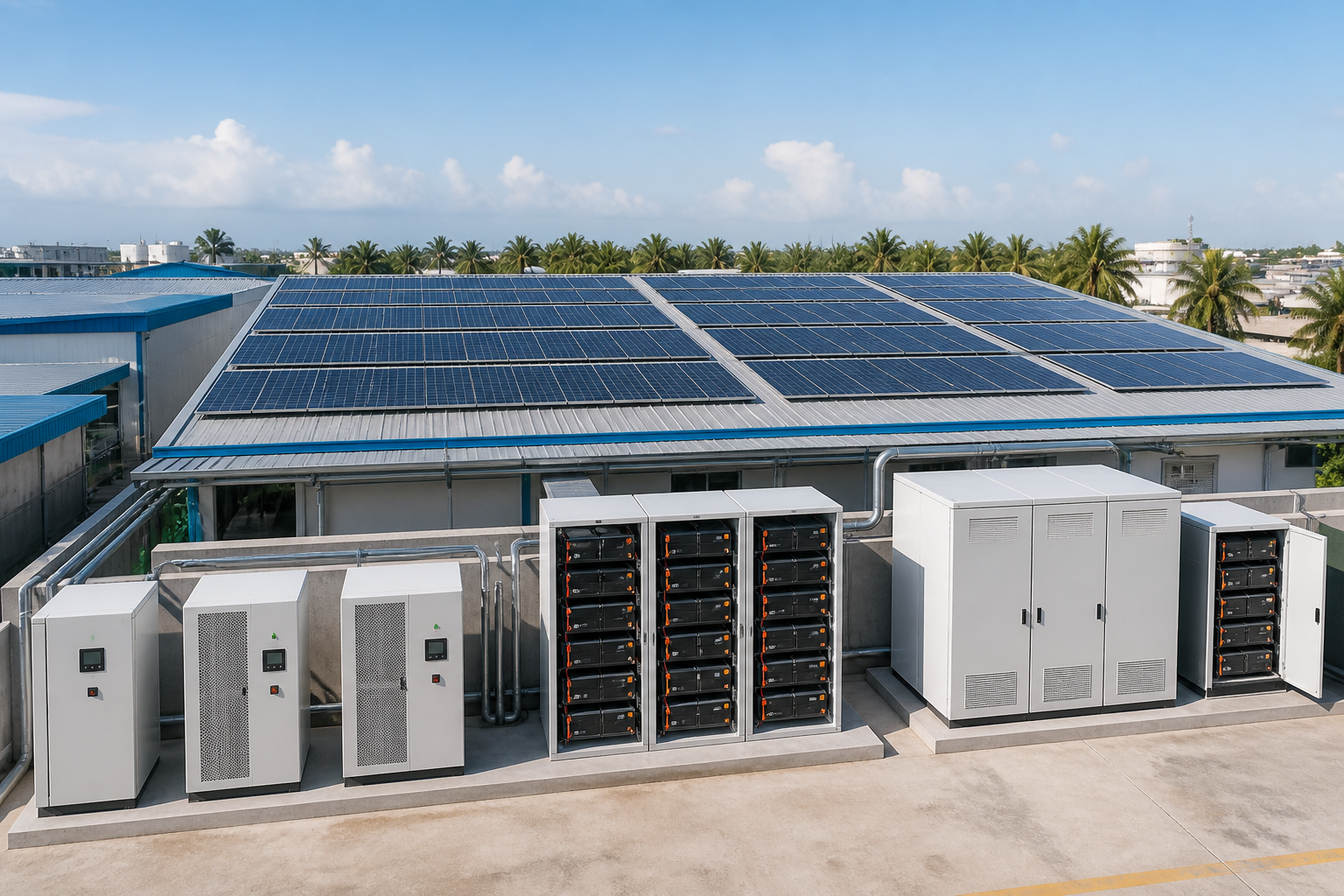
Factories and warehouses may use a solar energy system to reduce daytime energy cost, while storage can support offices, lighting, security systems, gates, small equipment, or selected backup circuits during outages.
Schools and clinics often need stable power for lighting, communications, fans, medical support equipment, refrigeration, or IT rooms. A solar energy storage system can help buyers plan backup loads instead of oversizing the whole building system.
Sites with weak grid access may need a hybrid or off-grid design. In these cases, solar energy storage battery sizing should consider night loads, rainy-season backup, generator integration, battery replacement planning, and maintenance capability.
Prepare the installation country, application type, grid condition, daily load, peak load, backup-hour target, roof or ground space, battery location, ambient temperature, communication requirements, expansion plan, quantity, packing needs, and delivery schedule.
Ask suppliers for system diagrams, product photos, PV module datasheets, inverter datasheets, battery cabinet drawings, BMS details, protection device list, installation guidance, monitoring options, warranty terms, spare-part support, and packing information. For factory direct sourcing, consistency matters because many buyers need the same solar energy system, solar energy storage system, and solar energy storage battery configuration across multiple shops, warehouses, schools, clinics, or industrial sites.
The first mistake is sizing a battery only by budget without calculating load and backup time. The second mistake is comparing PV panel wattage while ignoring inverter capacity, battery voltage, BMS protection, cabinet design, and installation environment. The third mistake is buying separate components without confirming system compatibility, communication protocol, documentation, and after-sales support.
Another common issue is ignoring future expansion. If the buyer may add more solar panels, more battery modules, or additional loads later, this should be considered before confirming inverter capacity, cabinet space, protection devices, and wiring design.
A solar energy system converts sunlight into electricity using PV modules and supporting equipment such as inverters, mounting, cables, protection devices, monitoring, and installation accessories.
A solar energy storage system stores solar electricity in batteries so it can be used later for backup, self-consumption, peak shifting, weak-grid support, or off-grid applications.
Buyers should compare usable capacity, battery chemistry, cycle life, BMS protection, cabinet design, temperature range, warranty terms, service access, and compatibility with the inverter or energy management system.
Storage is useful for off-grid sites, backup power, unstable grid areas, commercial self-consumption, telecom rooms, schools, clinics, shops, warehouses, farms, and industrial support loads.
Send the application, country, daily energy use, peak load, backup-hour target, grid condition, installation space, battery location, ambient temperature, quantity, and delivery schedule.
No. A solar energy storage battery should be selected according to load profile, backup target, inverter compatibility, environmental conditions, available space, safety requirements, and budget.
A reliable solar energy system should be selected as a complete package, not as isolated components. Buyers need to match PV modules, inverter, solar energy storage system, solar energy storage battery, protection, monitoring, installation conditions, future expansion, and service support.
If you are sourcing a solar energy system, solar energy storage system, or solar energy storage battery for commercial, industrial, school, clinic, shop, farm, telecom, or warehouse projects, contact Guangzhou Vantone Science & Technology Co., Ltd. for factory direct model selection and B2B quotation support.
