


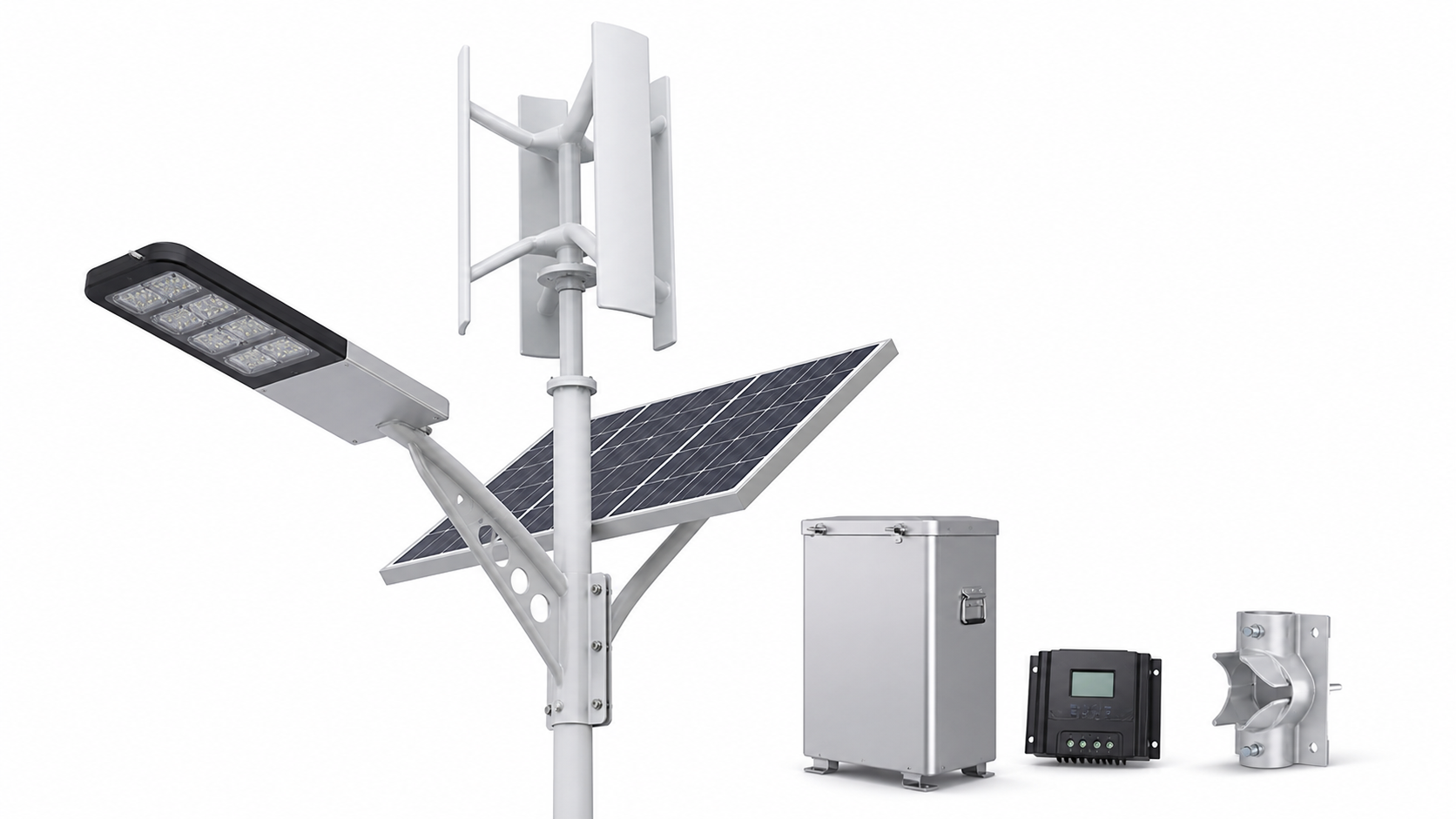
Solar wind hybrid street lights combine a solar panel, a small wind turbine, LED lighting, controller logic, and battery storage on one pole. For B2B buyers working on coastal roads, remote access roads, logistics yards, islands, and off-grid perimeter lighting, the appeal is simple: solar can perform strongly in daytime, while wind may add value where night wind, monsoon seasons, or open coastal exposure are part of the site profile.
The IEA Renewables 2025 outlook says global renewable power capacity is expected to double by 2030, with solar PV accounting for most growth and wind following as another major contributor. At project scale, a hybrid pole does not replace proper engineering, but it does reflect the same practical idea: combining renewable resources can improve the energy profile when the site has both solar exposure and useful wind conditions.
The U.S. Department of Energy describes distributed wind as wind turbines connected at the distribution level or used in off-grid applications to serve on-site demand. DOE also notes that wind turbines, solar panels, and storage can work together as a hybrid power system. For road lighting buyers, that means the wind component should be evaluated as a site-specific energy input, not as a decorative add-on.
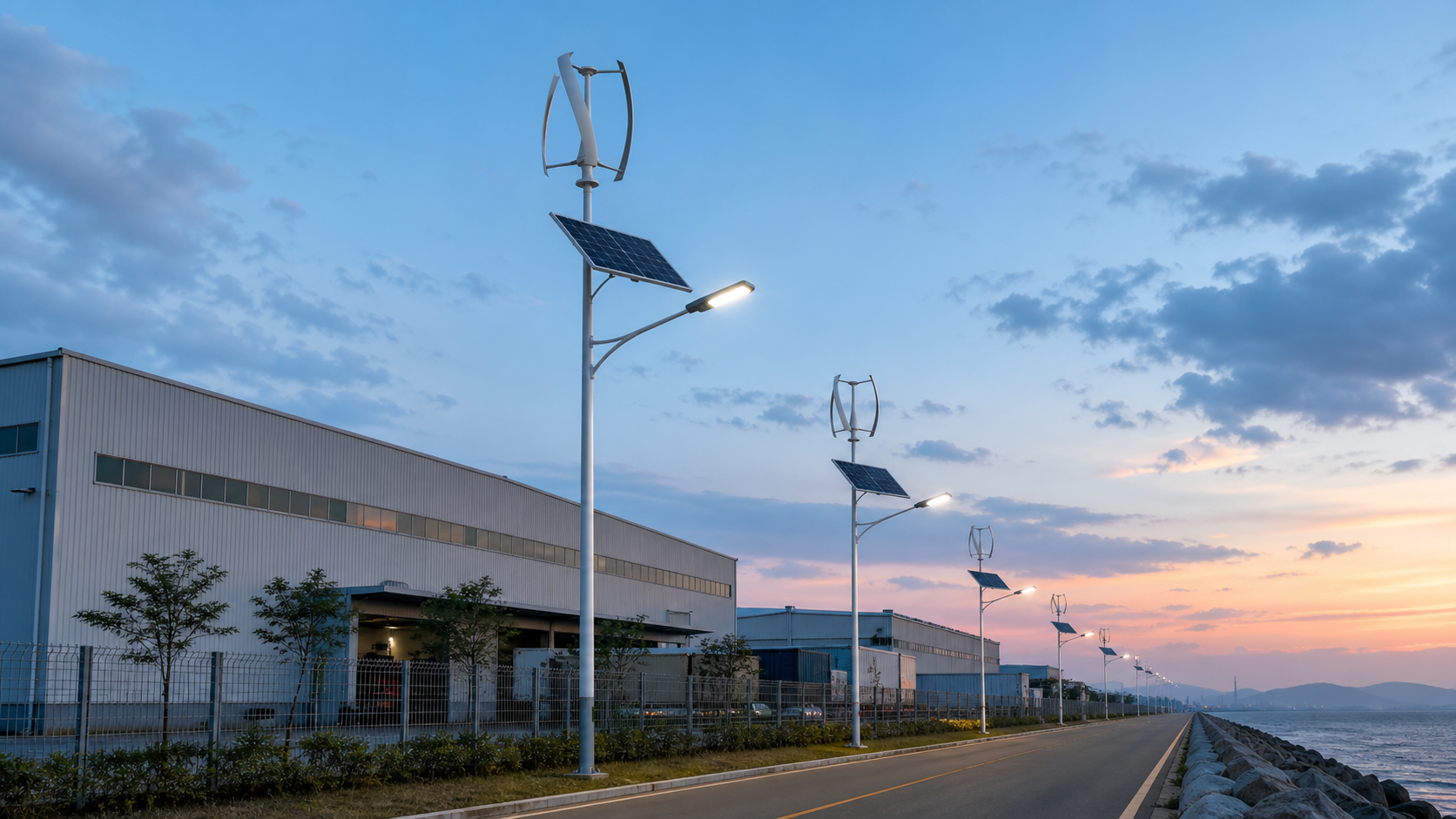
Before buying solar wind hybrid street lights, ask suppliers for local wind-speed assumptions, solar irradiation assumptions, battery autonomy, LED power, luminaire efficacy, controller strategy, turbine rated output, cut-in wind speed, pole load calculation, corrosion protection, IP rating, and installation requirements. For coastal markets, the bracket, fasteners, bearing protection, and cable entries deserve the same attention as the LED chip or solar panel wattage.
Lighting quality still matters. DarkSky responsible outdoor lighting principles recommend that outdoor lighting be useful, targeted, no brighter than necessary, controlled, and warmer colored where possible. For B2B road projects, this means requesting an optical layout, avoiding uncontrolled glare, using dimming schedules where suitable, and matching light distribution to the actual road or yard width.
Do not assume a wind turbine improves every solar street light project. If average wind speed is low, turbulent, or blocked by buildings, the turbine may add maintenance without enough energy value. Do not compare only rated wattage; check cut-in wind speed, battery capacity, LED efficiency, pole strength, and the real operating profile. Do not omit maintenance access, because hybrid poles have more moving and electrical parts than standard solar street lights.
They can be better for windy coastal or remote sites, but not for every project. The decision should be based on measured or credible local wind data, solar conditions, lighting hours, and maintenance capacity.
Share road width, pole height target, installation location, expected lighting hours, rainy-day backup requirement, wind exposure, corrosion environment, and photos or drawings of the site.
Yes, but specifications should change by site. Coastal humidity, desert dust, high temperatures, and wind profiles all affect battery, housing, turbine, and pole choices.
Guangzhou Vantone Science & Technology Co., Ltd. supports B2B buyers with solar street light, solar LED street light, solar wind hybrid street light, outdoor LED sports lighting, anti-glare court light, IP65 waterproof outdoor lights, and factory direct LED lighting options. Send your site location, road size, pole plan, wind exposure, and lighting-hour target to request a practical project recommendation.
