Solar LED street light Philippines projects are becoming more common in road safety, barangay access, public facility, and municipal improvement programs. For buyers working on coastal roads, tropical communities, ports, schools, parking areas, and local government projects, the main question is not whether solar lighting is useful. The real procurement question is how to specify a reliable system that can handle rain, heat, salt air, and long outdoor operating hours.
Recent public infrastructure examples show why the topic matters. The Department of Public Works and Highways reported solar lighting projects that added hundreds of single-arm solar street lights for road safety, while Philippine News Agency coverage has reported solar-powered streetlights on roads in La Union. The Department of Energy's Philippine Energy Plan also emphasizes renewable energy resources, including solar, as part of the country's long-term energy direction.
Philippine coastal and island environments can expose outdoor lighting to moisture, wind-driven rain, salt air, high UV exposure, and frequent maintenance constraints. A low-cost fixture may look acceptable in a catalog but fail early if the housing seal, bracket coating, battery protection, and installation details are weak.
B2B buyers should compare complete project suitability instead of only comparing wattage. A good quotation should explain the solar panel, battery, controller, LED module, housing material, mounting bracket, pole compatibility, packaging, spare parts, and warranty support.
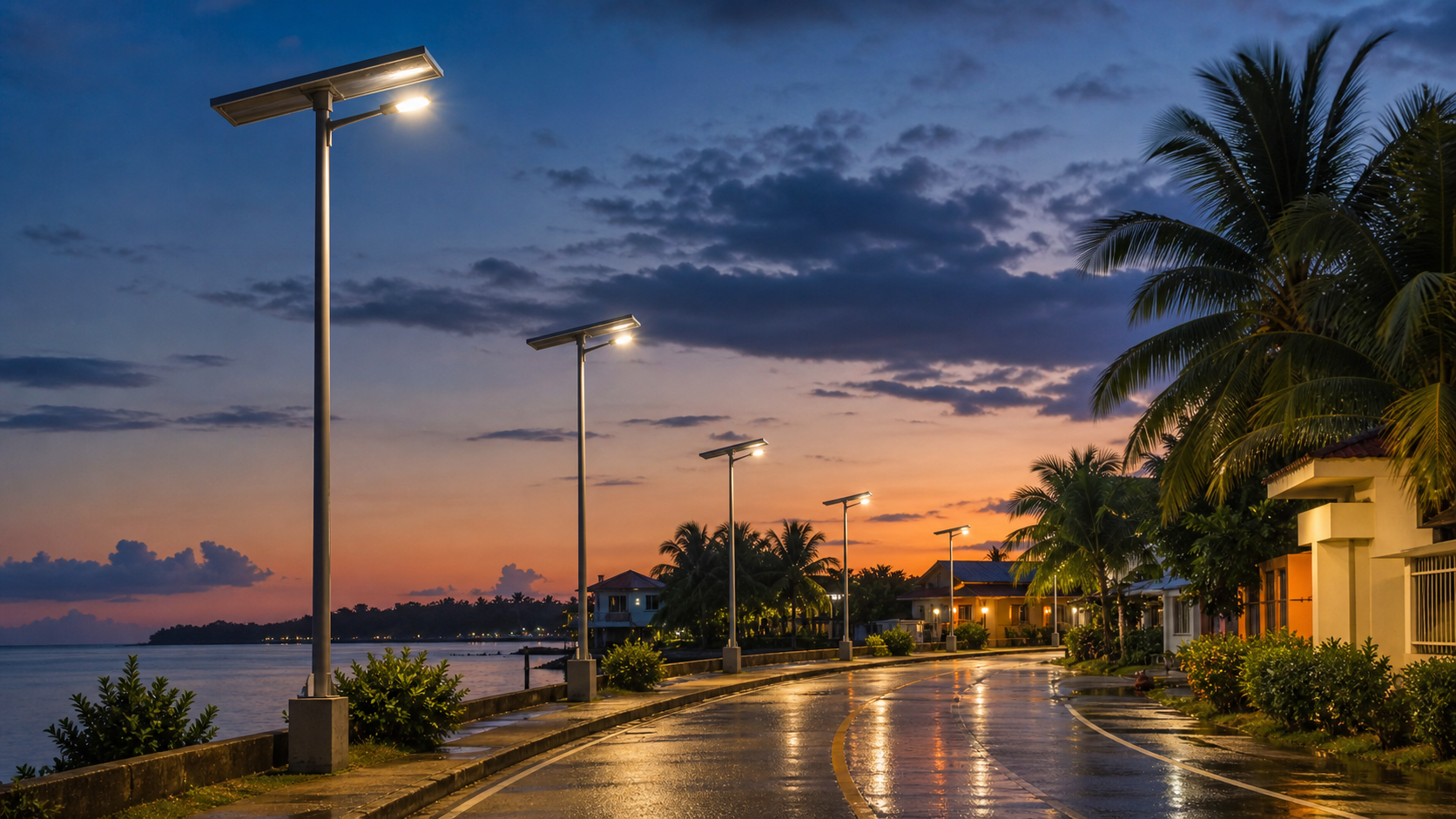
Ask how the panel wattage, battery capacity, controller, and lighting schedule are matched. The supplier should explain expected operating mode, charging assumptions, rainy-day reserve, and whether brightness can be dimmed during low-traffic hours.
For tropical and coastal use, IP65 should be treated as a practical baseline, not the whole answer. Check gasket design, cable glands, screw material, lens sealing, battery compartment protection, and whether installation instructions prevent water entry.
Salt air can attack weak brackets and fasteners. Buyers should request bracket material details, surface treatment, screw specifications, and pole-mount compatibility before approving a container order.
Roads, walkways, parking areas, and barangay access paths need different beam angles and mounting heights. Ask suppliers for a practical pole spacing recommendation and avoid choosing only by headline lumen output.
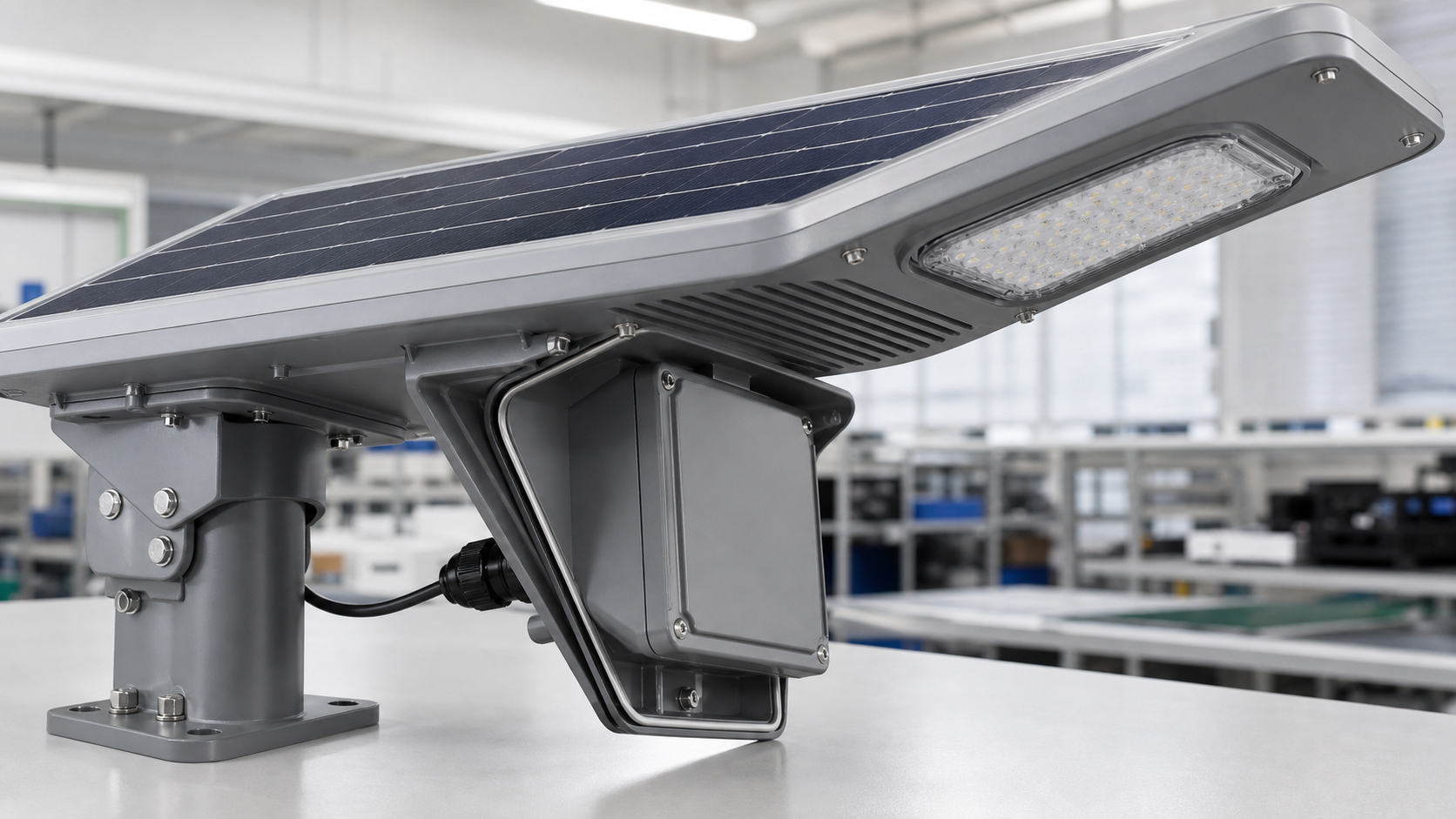
Before requesting a factory quotation, prepare the road width, pole height, pole spacing, installation location, average operating hours, required lighting mode, battery preference, project quantity, packing requirements, target delivery schedule, and after-sales expectations.
For distributors, factory direct LED lighting support can simplify repeat purchasing. Standardized models, consistent packaging, spare-part availability, and clear technical documents help when serving multiple municipal, school, warehouse, resort, and residential access projects.
The first mistake is buying by the lowest unit price without checking battery quality and waterproof construction. Solar lighting failures often come from system imbalance or sealing problems rather than the LED chip alone.
The second mistake is ignoring the installation environment. Coastal roads and tropical communities need more attention to corrosion resistance, wind exposure, rainwater paths, and bracket strength.
The third mistake is approving a shipment without sample testing, product photos, labels, packing checks, and clear warranty terms. For repeat B2B supply, those details protect both the importer and the final project owner.
Start with the project location, road width, pole height, operating hours, solar panel size, battery capacity, IP rating, bracket design, and local maintenance conditions.
IP65 is a practical baseline for many outdoor projects, but coastal buyers should also check gasket quality, cable glands, screw material, bracket coating, and installation guidance.
No. Barangay roads, coastal access roads, parking areas, and public paths may need different wattage, optics, pole spacing, and lighting schedules.
The battery affects operating time, rainy-day reserve, maintenance needs, and long-term cost. It should be matched with the solar panel, controller, and lighting mode.
A useful quotation should include panel wattage, battery type and capacity, LED power, lumen output, IP rating, housing material, bracket details, packing, lead time, warranty, and spare-part support.
Solar LED street light Philippines projects need reliable system matching, waterproof outdoor design, corrosion-resistant mounting, and supplier support that fits tropical and coastal conditions. A clear project brief helps buyers compare real value instead of only unit price.
If you are sourcing solar LED street lights for Philippine coastal roads, barangay access paths, parking areas, schools, or municipal projects, contact Guangzhou Vantone Science & Technology Co., Ltd. for factory direct model selection and B2B quotation support.


