


Anti-glare LED court lights are now a practical procurement topic for padel courts, tennis courts, school sports areas, club venues, and municipal recreation projects across the UAE, Saudi Arabia, and nearby Middle East markets. Buyers need lighting that supports play visibility without creating harsh glare for athletes, spectators, nearby roads, or surrounding properties.
For B2B buyers, the right fixture is not only a wattage decision. It is a full project specification covering optical control, pole height, aiming angle, waterproof construction, thermal design, surge protection, installation accessories, and after-sales support.
Court lighting is different from general area lighting because players frequently look upward, track fast balls, and move through the lit zone from many directions. Poorly aimed or overpowered fixtures may reduce comfort and make the facility harder to use at night.
DarkSky outdoor sports lighting guidance focuses on reducing offsite and sky-glow impacts for playing-field lighting. Its broader lighting principles also encourage using light only where needed, only when needed, and no brighter than necessary. B2B buyers can turn those ideas into practical quotation requirements: controlled optics, shields or visors, accurate aiming, and project-specific layouts.
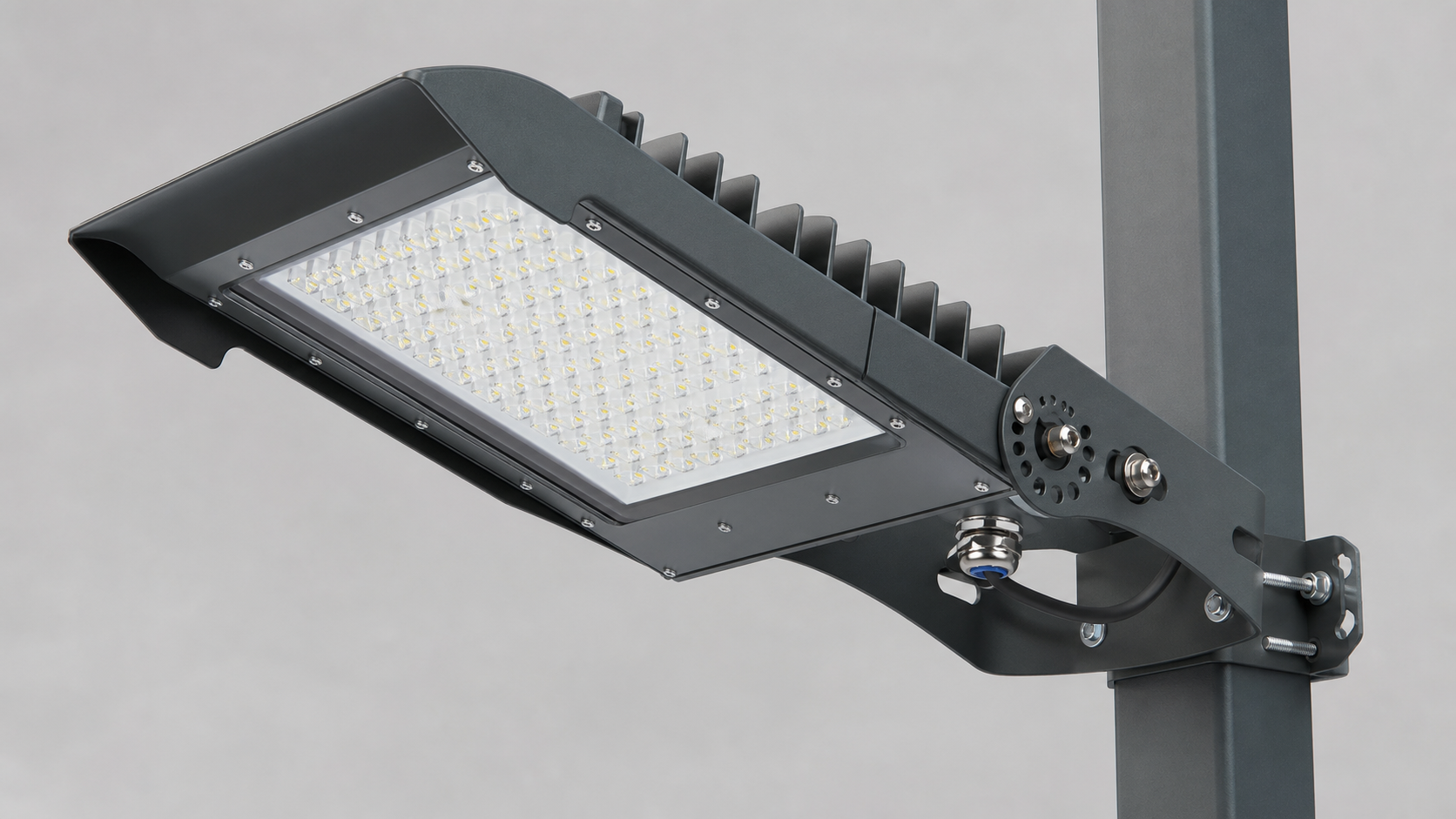
Ask suppliers for the recommended beam angle, mounting height, pole layout, and aiming direction based on court size and surrounding conditions. A good plan avoids bright spots, dark corners, and uncontrolled light outside the court.
Anti-glare visors, shielding, lens design, and fixture tilt all matter. For padel and tennis courts near homes, roads, hotels, or schools, buyers should ask how glare and spill light will be controlled before installation.
Middle East projects may face dust, heat, irrigation water, coastal air, and long outdoor operating hours. Confirm IP rating, gasket structure, cable gland quality, bracket coating, screw materials, and driver compartment sealing.
Outdoor LED sports lighting should use stable drivers, practical surge protection, effective heat dissipation, and serviceable components. Buyers should request input voltage range, surge rating, wiring instructions, and spare-part support.
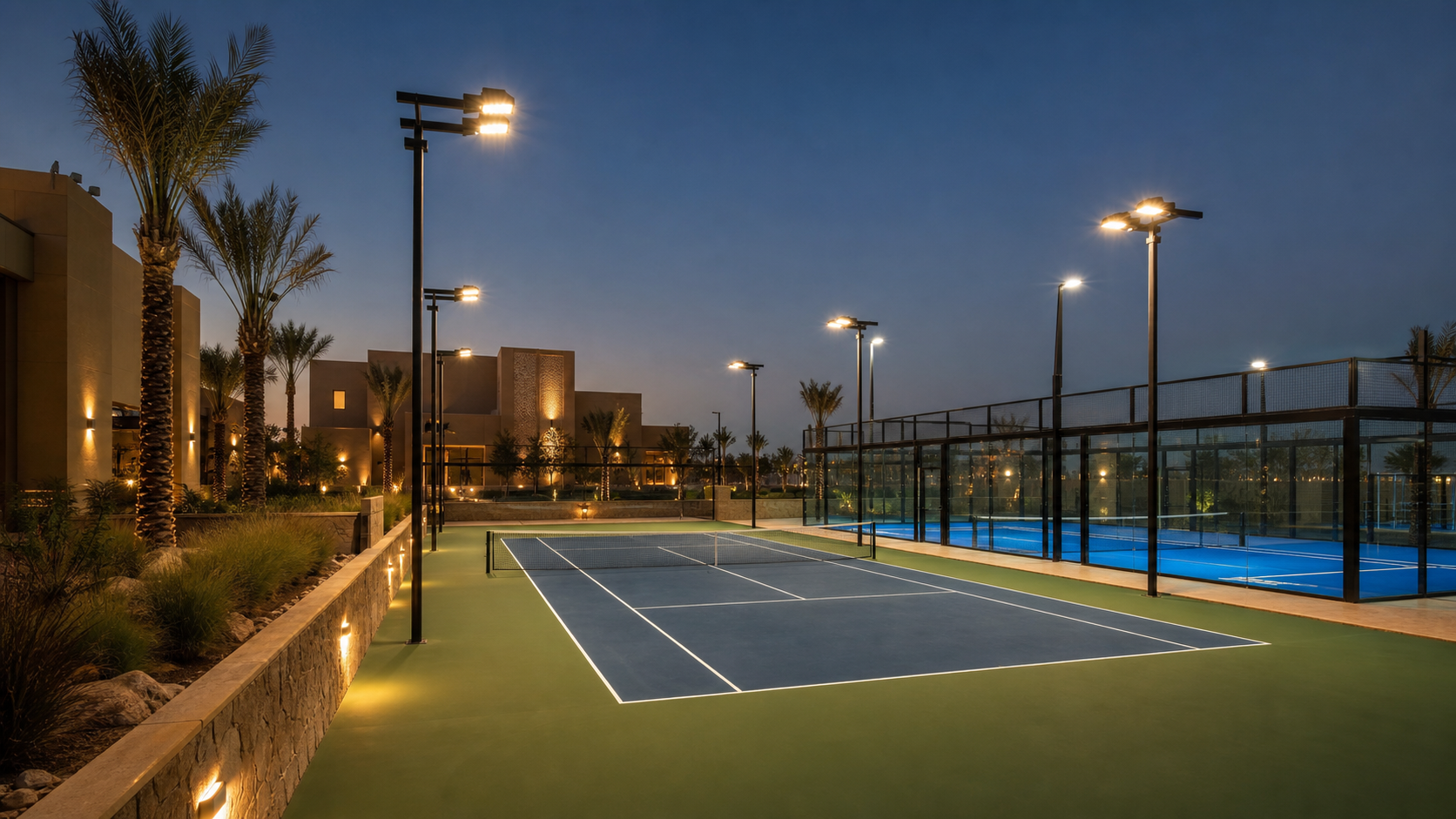
Before asking for a quotation, prepare the court type, number of courts, pole positions, mounting height, operating voltage, target use level, nearby sensitive areas, required accessories, packaging needs, installation schedule, and whether OEM branding is required.
Factory direct LED lighting support can help distributors keep model selection, spare parts, packaging, and repeat orders consistent across school, club, and municipal projects. Buyers should request product photos, fixture drawings, photometric files when available, bracket details, sample options, and clear warranty terms.
The first mistake is choosing by wattage only. Two lights with the same wattage can perform differently because optics, shielding, driver quality, and thermal design are different.
The second mistake is ignoring the surrounding environment. Courts near buildings, roads, or residential areas need stronger glare and spill-light control than isolated sites.
The third mistake is approving a quotation without installation details. Bracket type, cable entry, aiming range, packing, and spare driver availability can affect long-term project results.
Anti-glare performance usually comes from controlled optics, shielding or visor design, correct fixture tilt, suitable mounting height, and avoiding excessive brightness.
Yes. Padel courts need clear visibility in a compact playing area, so controlled beam direction and glare reduction are important for players and spectators.
IP65 is a practical baseline for many outdoor projects, but buyers should also check gasket quality, cable glands, bracket coating, screws, and installation guidance.
A useful quotation should include wattage, lumen output, beam angle, IP rating, driver details, surge protection, housing material, bracket type, packing, lead time, and warranty terms.
Use suitable optics, accurate aiming, shields or visors where needed, and avoid overpowered fixtures that send light outside the intended playing area.
Anti-glare LED court lights should be selected around visibility, optical control, waterproof outdoor construction, electrical reliability, and supplier support. A clear project brief helps buyers compare complete value instead of unit price alone.
If you are sourcing anti-glare LED court lights for padel, tennis, school, club, or municipal sports projects in the UAE, Saudi Arabia, or other Middle East markets, contact Guangzhou Vantone Science & Technology Co., Ltd. for factory direct model selection and B2B quotation support.
