
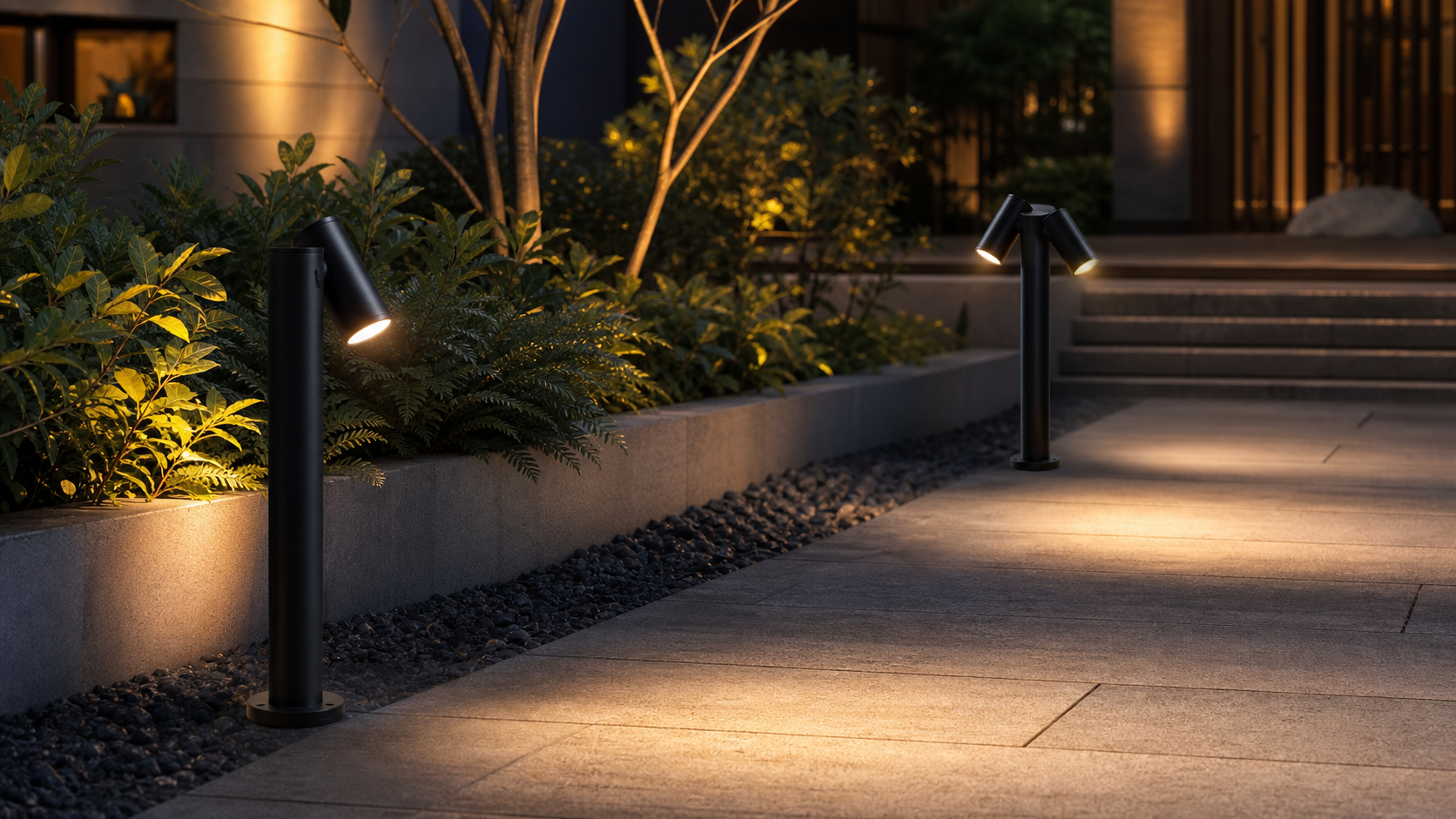
A rotatable LED bollard light is best specified by the target surface and viewing direction. Aim each head toward the path, planting or architectural detail while keeping the bright aperture outside normal eye lines. Choose single heads for one primary target and dual heads when two zones require independent aiming. Confirm spacing with a night mock-up or lighting calculation.
Key facts for project buyers
- OD-032 provides single-head and dual-head configurations.
- Each head is rated at a confirmed 5W with 3000K warm-white output.
- The fixture is 600 mm high with a 65 mm head and 90 mm base diameter.
- Confirmed construction is die-cast aluminum with an optical lens and IP65 protection.
- Rotatable heads support flexible aiming, but glare and beam overlap must be controlled.
Where should a rotatable bollard light be aimed?
Start by defining the visual task. A path needs safe recognition of edges and level changes. Planting may need vertical texture and controlled highlights. A courtyard may combine circulation, seating and a feature wall. The adjustable head should direct light to that task rather than simply pointing outward.
Keep the beam below the typical sight line of pedestrians and seated guests. From the main approach direction, the bright optical aperture should be shielded by the head angle whenever possible.
Single head or dual head: which is better?
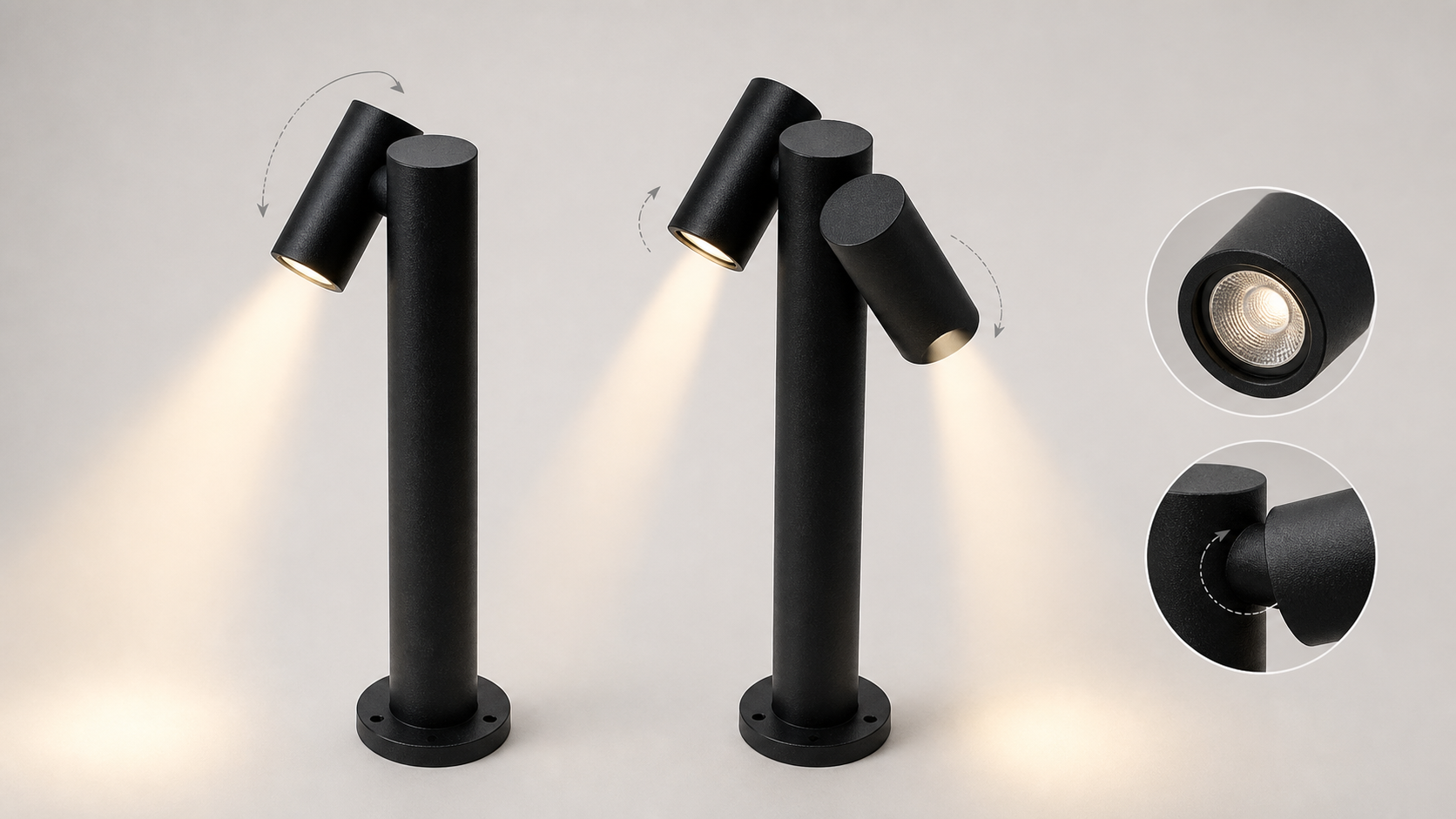
A single-head bollard is appropriate when the project has one clear target, such as a path edge or planting bed. It creates a cleaner appearance and simplifies aiming. A dual-head version is useful where one location must serve two directions—for example, lighting a path and adjacent planting.
Two heads do not automatically mean twice the useful light. Their beams can overlap, create excessive brightness or point toward windows. Treat each head as an independent source and show both aiming directions on the landscape plan.
- Use one head for a single path, wall or planting target.
- Use two heads for two distinct directions or adjacent zones.
- Avoid aiming opposing heads into pedestrian or driver sight lines.
- Coordinate aiming with irrigation, planting growth and maintenance access.
How should bollard spacing be determined?
Spacing depends on beam angle, head tilt, mounting height, surface reflectance and the minimum acceptable light between fixtures. A simple rule based only on wattage can produce dark gaps or excessive overlap.
For design approval, test a representative section at night or use photometric data. Review not only average illuminance but also the darkest points, visual rhythm and spill light beyond the property boundary.
Why 3000K warm white is common in landscapes
The confirmed OD-032 color temperature is 3000K. Warm white generally supports a comfortable hospitality and residential atmosphere, complements wood and planting, and can appear less harsh than cooler light at low mounting heights.
Color temperature should still match the wider site. If façades, step lights and canopy lights use a different CCT, the mixed appearance should be reviewed before procurement.
What installation details protect long-term performance?
IP65 protection supports outdoor use when the base, cable entry and enclosure are installed correctly. Provide a stable foundation, sealed underground connection and drainage that prevents standing water around the base.
The die-cast aluminum body has a sand-texture coating. Protect the finish during construction and keep soil, mulch and irrigation spray away from openings and joints. Confirm access to screws and wiring for future maintenance.
- Level foundation and secure anchor arrangement.
- Waterproof below-grade cable connection and correct earthing.
- Drainage around the base and separation from irrigation outlets.
- Final night aiming after planting and hardscape are complete.
- Recorded head angles for consistent maintenance.
Confirmed product data
| Confirmed item | OD-032 data |
|---|---|
| Product type | Rotatable LED bollard light |
| Head options | Single head / dual head |
| Lamp power | 5W per head |
| Input voltage | AC85-265V |
| IP rating | IP65 |
| Color temperature | 3000K warm white |
| Material | Die-cast aluminum + optical lens |
| Dimensions | 600 mm height / 65 mm head / 90 mm base |
| Finish | Sand-texture coating |
| Warranty | 36 months |
Project recommendation
Use OD-032 where directional low-level lighting is required, then confirm head count, spacing and tilt with the real landscape plan. Send path widths, planting locations, surface materials, voltage, quantity and preferred aiming directions for a project quotation.
View the OD-032 Rotatable LED Bollard Light product page and confirmed specifications.
Frequently asked questions
Are rotatable bollard lights suitable for pathway lighting?
Yes, when the heads are aimed to provide continuous path recognition without exposing the bright aperture to normal pedestrian sight lines.
When should a dual-head bollard be used?
Use a dual-head model when one position must illuminate two separate targets, such as a path and a planting bed, and each beam can be aimed without glare.
Is 3000K good for gardens?
3000K warm white is widely used for residential and hospitality landscapes because it creates a comfortable appearance and works well with planting and warm materials.
How far apart should OD-032 bollards be installed?
Spacing should be confirmed from beam distribution, head angle, surface reflectance and the required minimum light. A night mock-up or photometric calculation is recommended.


