
A power-selectable LED shoebox light can replace several fixed-output SKUs when one approved fixture can be configured for different site zones. This reduces distributor inventory and gives contractors controlled flexibility during commissioning. Selectability must be documented: only authorized settings should be used, the final wattage and CCT should be recorded, and every setting must remain within the approved photometric design.
Key facts for project buyers
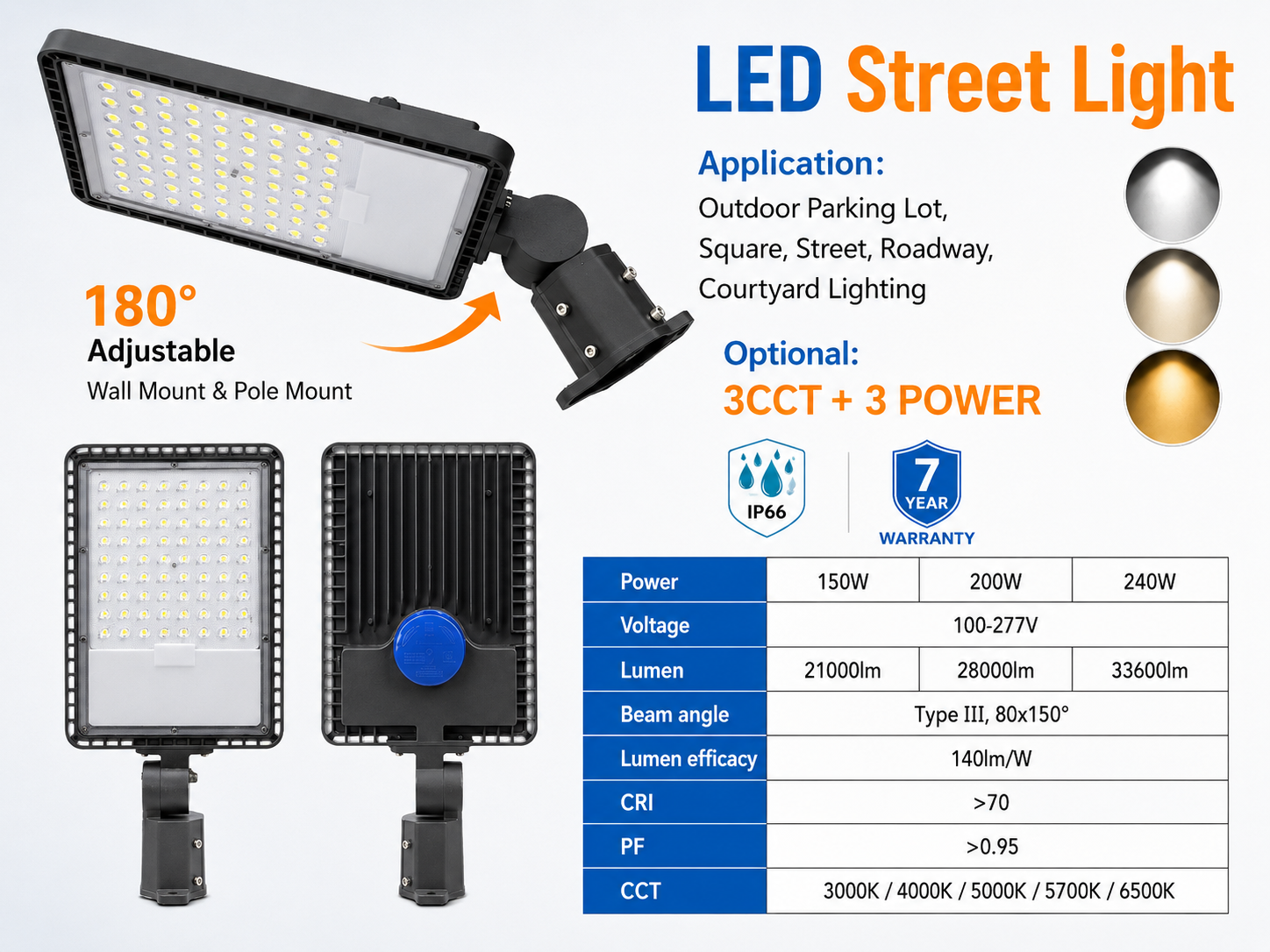
- STL-005 has confirmed 150W, 200W and 240W configurations.
- The listed outputs are 21,000 lm, 28,000 lm and 33,600 lm at 140 lm/W.
- Confirmed input is 100-277V with Type III 80 × 150° optics and IP66 protection.
- Optional three-power and three-CCT selection can reduce SKU count.
- Field settings should be locked, labeled and included in commissioning records.
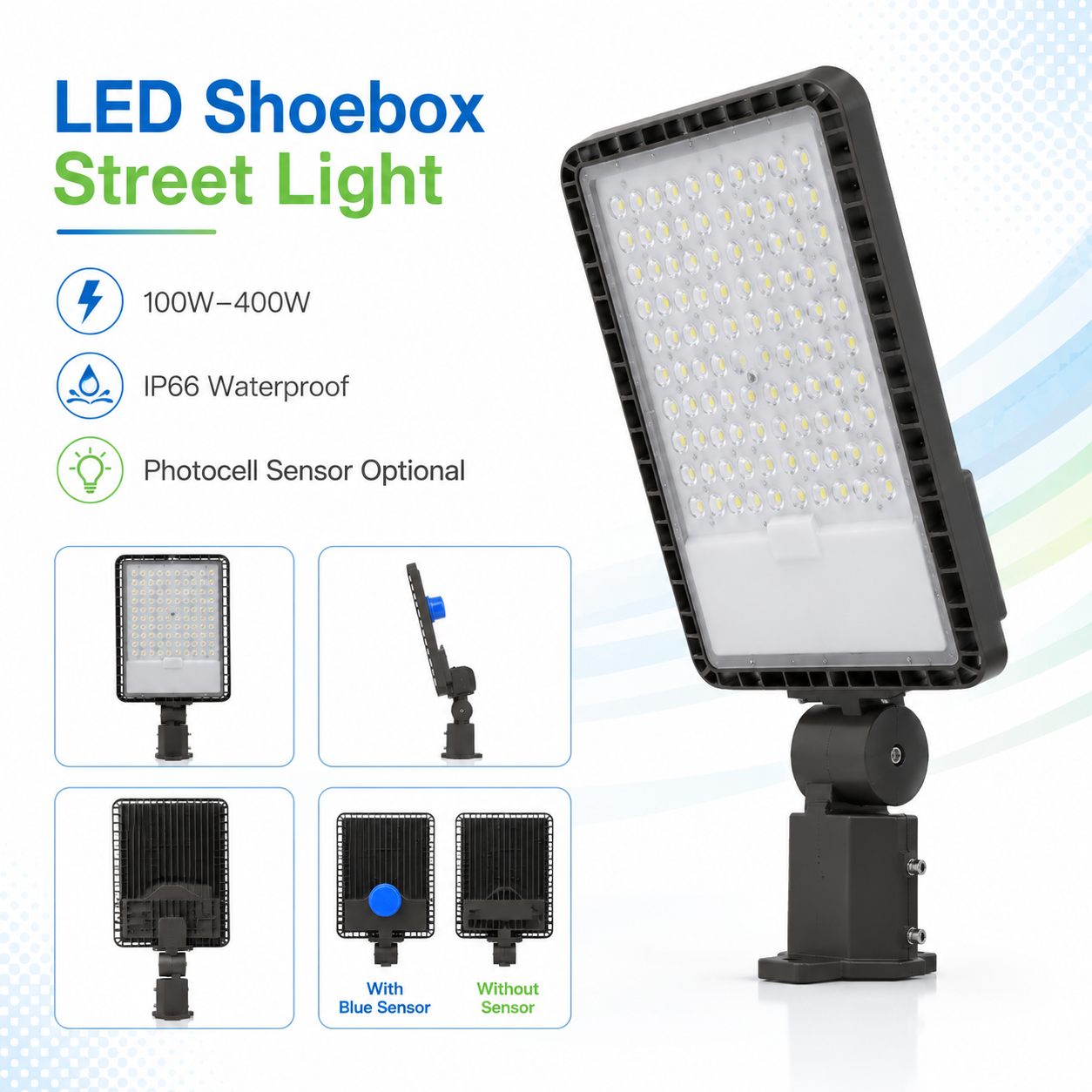
How does power selectability reduce inventory?
A distributor may normally stock separate 150W, 200W and 240W area lights. If one certified STL-005 configuration supports three approved power positions, the same base product can serve several common orders. This can reduce forecasting errors and slow-moving variants.
The benefit is strongest when the housing, optic, mounting and accessories are shared. Buyers should confirm that the quoted selectable version is the same certified construction represented in the project documents.
Where does field flexibility help contractors?
Parking lots and logistics sites often contain several zones: vehicle circulation, loading edges, perimeter roads and employee parking. A selectable fixture can help the commissioning team correct an approved zone that needs less or more output without replacing the whole luminaire.
This flexibility is not permission to improvise. The lighting designer should define allowed settings by pole or zone. A setting change can affect average illuminance, uniformity, glare and connected load.
- Assign an approved wattage to each pole on the lighting plan.
- Switch power only when the circuit is safely isolated.
- Record the final setting on the pole schedule and maintenance file.
- Recheck photometric and electrical limits after any change.
What is the value of selectable CCT?
The confirmed STL-005 product data lists several CCT options, and an optional three-CCT version can consolidate warm, neutral and cooler configurations. This helps distributors support different local preferences with fewer finished-goods SKUs.
For a single project, consistency is usually more important than maximum choice. Select the required CCT during commissioning, label it and avoid a patchwork appearance between adjacent poles.
How should 150W, 200W and 240W be compared?
The confirmed outputs scale from 21,000 lm to 33,600 lm at the listed 140 lm/W efficacy. The Type III 80 × 150° optic is intended for directional area and roadway coverage, but the exact result depends on mounting height, setback, spacing and tilt.
Model each candidate power at the real pole positions. Choose the lowest approved setting that meets illuminance, uniformity and glare requirements with the specified maintenance factor.
What controls prevent selectable-product mistakes?
Procurement documents should name the allowed power and CCT settings, selector access method and whether tamper control is required. Factory settings should be listed on the packing label and product schedule.
During commissioning, verify each pole and retain a final setting register. Maintenance teams should replace a fixture with the same approved settings rather than relying on visual brightness.
- Approved setting matrix by site zone or pole number.
- Factory-default and commissioned setting labels.
- Photometric files for every permitted power setting.
- Circuit load and protective-device verification.
- Maintenance procedure for replacement and reconfiguration.
Confirmed product data
| Confirmed item | 150W | 200W | 240W |
|---|---|---|---|
| Luminous flux | 21,000 lm | 28,000 lm | 33,600 lm |
| Input voltage | 100-277V | 100-277V | 100-277V |
| Beam angle | Type III, 80 × 150° | Type III, 80 × 150° | Type III, 80 × 150° |
| Luminous efficacy | 140 lm/W | 140 lm/W | 140 lm/W |
| CRI | >70 | >70 | >70 |
| Power factor | >0.95 | >0.95 | >0.95 |
| CCT options | 3000K / 4000K / 5000K / 5700K / 6500K | 3000K / 4000K / 5000K / 5700K / 6500K | 3000K / 4000K / 5000K / 5700K / 6500K |
| IP rating | IP66 | IP66 | IP66 |
| Warranty | 7 years | 7 years | 7 years |
Project recommendation
Use STL-005 selectability to simplify approved variants, not to replace lighting design. Send the pole layout, mounting height, spacing, target performance, voltage, zone-by-zone wattage needs, CCT preference and quantity for a controlled proposal.
View the STL-005 Power-Selectable LED Shoebox Street Light product page and confirmed specifications.
Frequently asked questions
Can one power-selectable shoebox light replace three fixed-wattage SKUs?
It can when the quoted version is approved for the three settings and the shared housing, optic, driver and thermal design meet the project requirements at every setting.
Can installers change wattage after the project is complete?
Only through an authorized maintenance process. The circuit must be isolated, the new setting must remain within the approved photometric and electrical design, and records should be updated.
Does selectable CCT save energy?
CCT selection primarily changes color appearance. Energy use is controlled mainly by input power, operating hours and dimming, although exact performance can vary by configuration.
Where is STL-005 commonly evaluated?
Its Type III optic, adjustable mounting and 150W-240W range suit evaluation for parking lots, access roads, squares, courtyards and logistics areas.


