
LED street-light mounting height and wattage must be selected together. Higher mounting can widen coverage but reduces illuminance at the surface and may require more output or a different optic. Lower mounting can increase local brightness but may need closer spacing to maintain uniformity. The final combination should be verified with the actual road geometry and a photometric calculation.
Key facts for project buyers
- STL-002 offers confirmed 30W, 50W, 100W, 150W and 200W options.
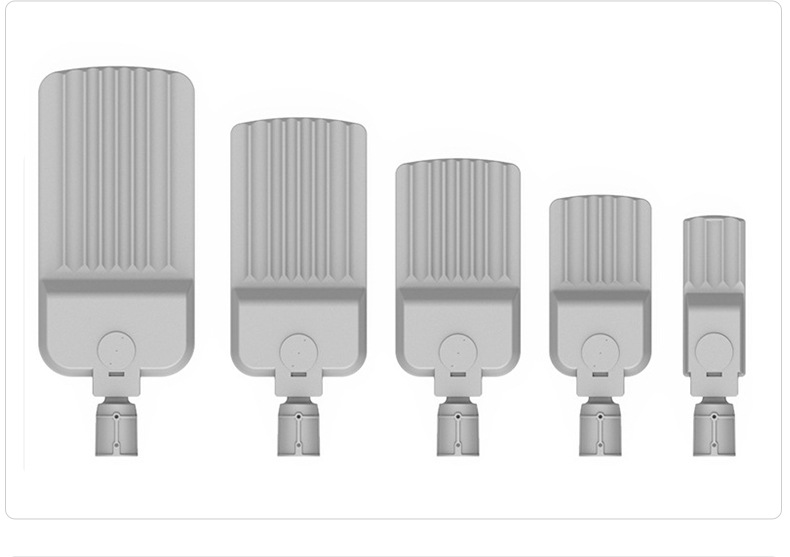
- LED quantities increase from 64 to 256 Lumileds 3030 packages across the range.
- All listed configurations use IP65 protection, AC100-277V input and 3000-6500K CCT.
- There is no universal mounting-height-to-wattage table for every road.
- Pole height, road width, setback, spacing, optic and target lux must be modeled together.
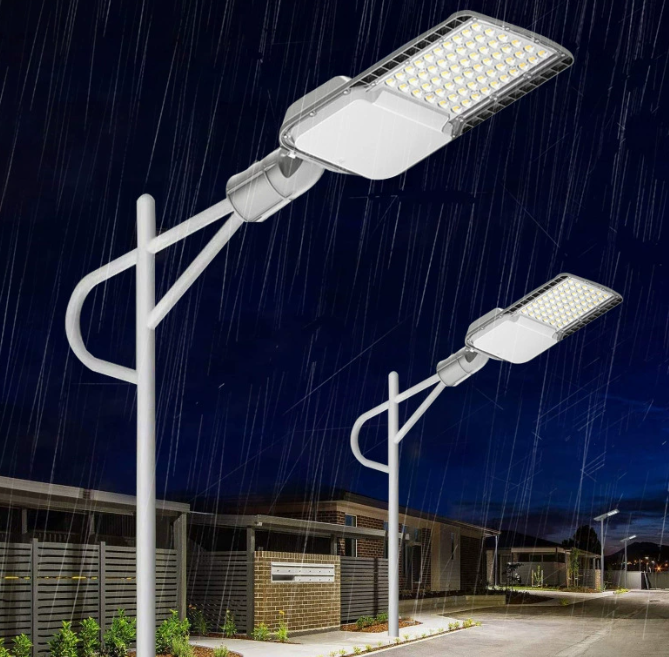
Why does mounting height change the wattage decision?
As a luminaire moves higher, its light spreads over a larger area and the illuminance at any point generally decreases. This can improve coverage but may require more lumens to maintain the target road level. The exact result depends on the optical distribution.
A low pole can deliver strong light close to the fixture, but wide spacing may create dark gaps. Selecting more wattage without correcting the spacing or optic can increase glare near each pole while leaving poor uniformity between poles.
A reliable five-step selection method
First, draw the road cross-section, including carriageway, sidewalk, median and pole setback. Second, record pole height, arm length, tilt and spacing. Third, define the applicable illuminance, uniformity and glare criteria. Fourth, select candidate STL-002 wattages and optics. Fifth, compare the photometric results and energy use.
This method keeps wattage in its proper role: one adjustable input in a geometric lighting design.
- Road width and number of lanes.
- Mounting height, spacing, setback and outreach.
- Target average and minimum illuminance.
- Optical distribution and tilt angle.
- Maintenance factor, dimming profile and operating hours.
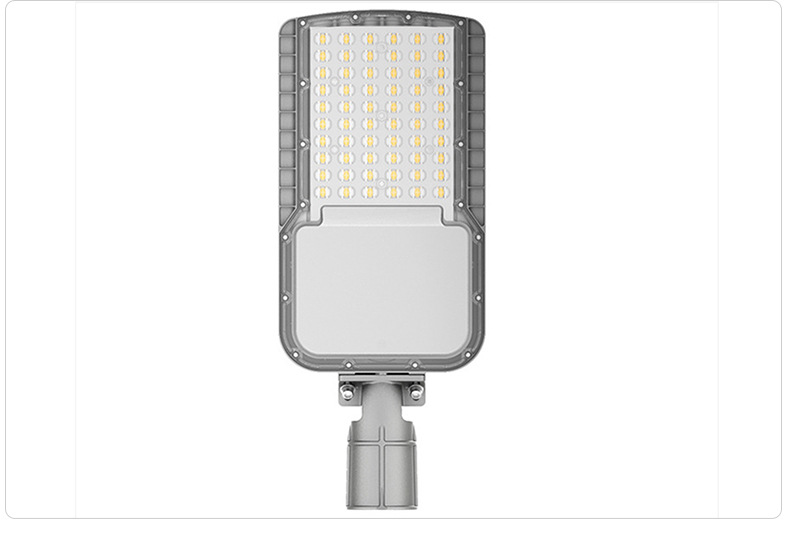
How can the 30W-200W range be screened?
For early planning, 30W and 50W versions are natural candidates for lower-output applications such as smaller residential roads or access areas. The 100W option provides a middle point for broader local-road evaluation. The 150W and 200W sizes can be evaluated for wider roads, higher mounting or longer spacing.
These are not guaranteed application limits. A well-chosen optic at lower wattage may outperform a higher-wattage fixture with poor beam placement. Always confirm with the specific photometric file.
What do LED quantity, CCT and CRI add to the decision?
The confirmed STL-002 LED count rises with power from 64 to 256 Lumileds 3030 packages. More packages can distribute electrical and thermal load across the board, but the final efficacy and lifetime still depend on drive current, thermal design and operating conditions.
The family lists 3000-6500K and CRI of at least 70. Select a CCT that matches local policy and surrounding areas. Higher CCT is not a substitute for adequate illuminance, and visual comfort should be considered alongside color appearance.
What should be checked before releasing the order?
Verify the quoted wattage, optic, CCT, voltage and driver against the approved lighting calculation. Confirm pole-arm compatibility, fixture orientation, surge protection and cable entry. The IP65 rating assumes correct installation and enclosure handling.
For large projects, inspect a sample installation at night before full rollout. A field review can reveal glare, tree obstruction, unexpected road reflectance or alignment issues that are not visible in a spreadsheet.
- Approved photometric layout tied to the exact model.
- Pole-arm diameter, insertion depth and tilt.
- AC100-277V supply and project surge requirement.
- Selected CCT and control method.
- Warranty, labeling, packaging and spare-parts plan.
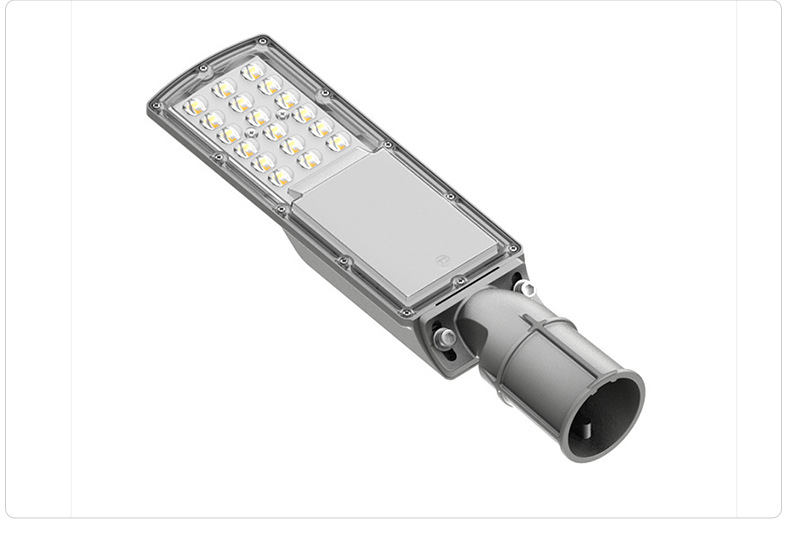
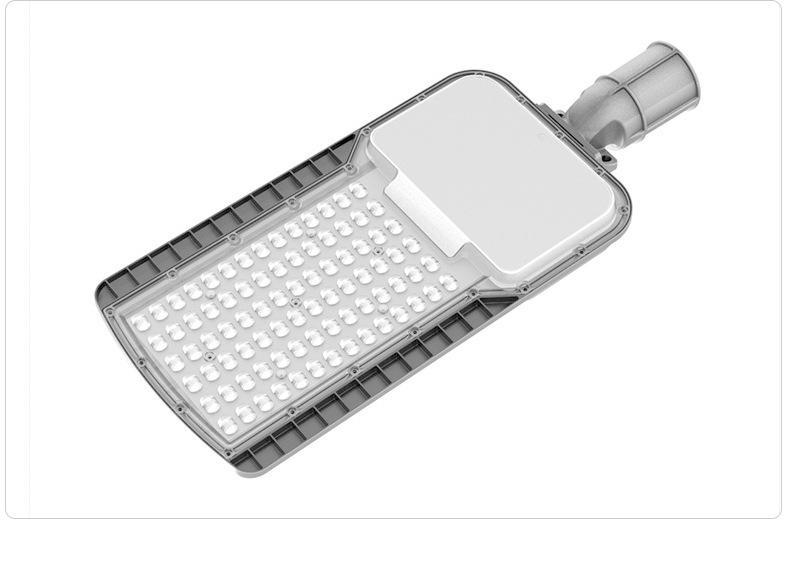
Additional STL-002 LED Street Light product views
Confirmed product data
| Confirmed item | 30W | 50W | 100W | 150W | 200W |
|---|---|---|---|---|---|
| LED quantity | 64 pcs | 96 pcs | 144 pcs | 192 pcs | 256 pcs |
| Chip model | Lumileds 3030 | Lumileds 3030 | Lumileds 3030 | Lumileds 3030 | Lumileds 3030 |
| CCT | 3000-6500K | 3000-6500K | 3000-6500K | 3000-6500K | 3000-6500K |
| IP rating | IP65 | IP65 | IP65 | IP65 | IP65 |
| CRI | ≥70 | ≥70 | ≥70 | ≥70 | ≥70 |
| Power factor | ≥0.9 | ≥0.9 | ≥0.9 | ≥0.9 | ≥0.9 |
| Input voltage | AC100-277V | AC100-277V | AC100-277V | AC100-277V | AC100-277V |
Project recommendation
Use the STL-002 family as a five-step candidate range, then let the road geometry and photometric target determine the final wattage. Send mounting height, road width, spacing, pole-arm details, required standard, voltage and quantity for a project-specific proposal.
View the STL-002 LED Street Light product page and confirmed specifications.
Frequently asked questions
What wattage is best for a 6-meter street-light pole?
Pole height alone is insufficient. Road width, pole spacing, setback, optic and target illuminance must also be known before selecting wattage.
Does a higher pole always need a higher-wattage light?
Often more output is evaluated, but the required wattage depends on optics, spacing and the performance target. A photometric calculation is required.
Can 30W and 200W fixtures use the same spacing?
They may use the same physical spacing in different applications, but they will not deliver the same lighting result. Each configuration must be modeled.
What mounting data should be sent for STL-002?
Send pole height, spacing, arm length, arm diameter, tilt, road dimensions, voltage, target lux and quantity.


