


A solar street light for industrial parks must do more than illuminate a road. For B2B buyers managing factory roads, logistics yards, loading entrances, staff parking, perimeter lanes, and remote access routes, the right system should reduce cabling work, support reliable night operation, and match local environmental conditions.
Independent buyers in the Philippines, Southeast Asia, the UAE, Saudi Arabia, and the wider Middle East often compare solar lighting because projects may include long road sections, distributed poles, or sites where trenching is costly. Reliable public guidance from the U.S. Department of Energy highlights the role of efficient solid-state lighting and exterior lighting procurement, while DarkSky guidance reminds buyers to control glare, direct light only where needed, and avoid unnecessary spill light.
Industrial park lighting is different from decorative outdoor lighting. Roads may serve delivery trucks, forklifts, workers, security patrols, and visitors. A practical specification should consider pole spacing, road width, nightly operating schedule, rainy season conditions, dust exposure, ambient heat, battery autonomy, and maintenance access.
For regional buyers, energy planning sources from IEA country profiles and national energy strategies show why efficient infrastructure remains relevant across fast-growing markets. Still, buyers should avoid inflated claims. The safest procurement approach is to request clear product specifications, installation guidance, and realistic lighting layouts from the supplier.
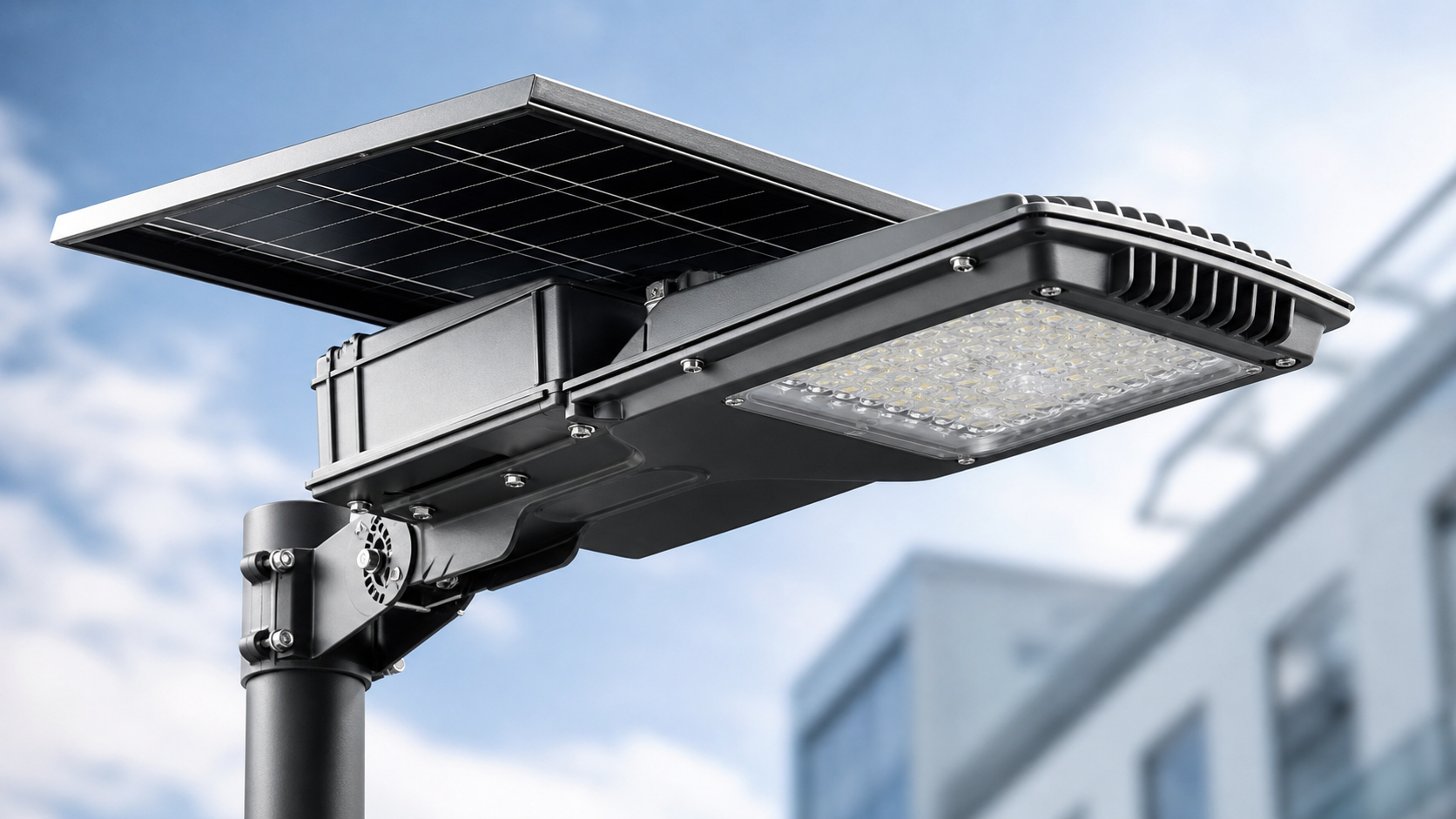
Ask how many rainy or cloudy days the system is designed to support, and confirm whether the supplier's recommendation matches the local sunshine pattern and nightly working hours. Battery type, protection circuit, and service access should be clear in the quotation.
The panel must be sized for the load and mounted to receive practical sunlight on site. Check whether nearby buildings, trees, signs, or dust accumulation will reduce charging performance.
Industrial parks may face rain, dust, humidity, coastal air, and high temperatures. Review the fixture housing, gasket, cable entry, bracket, fasteners, battery compartment, and controller protection instead of relying only on a headline waterproof rating.
Good solar LED street lights should put light onto the road surface, not into drivers' eyes or neighboring properties. Choose beam patterns, mounting height, and aiming details that support safe visibility and responsible outdoor lighting.
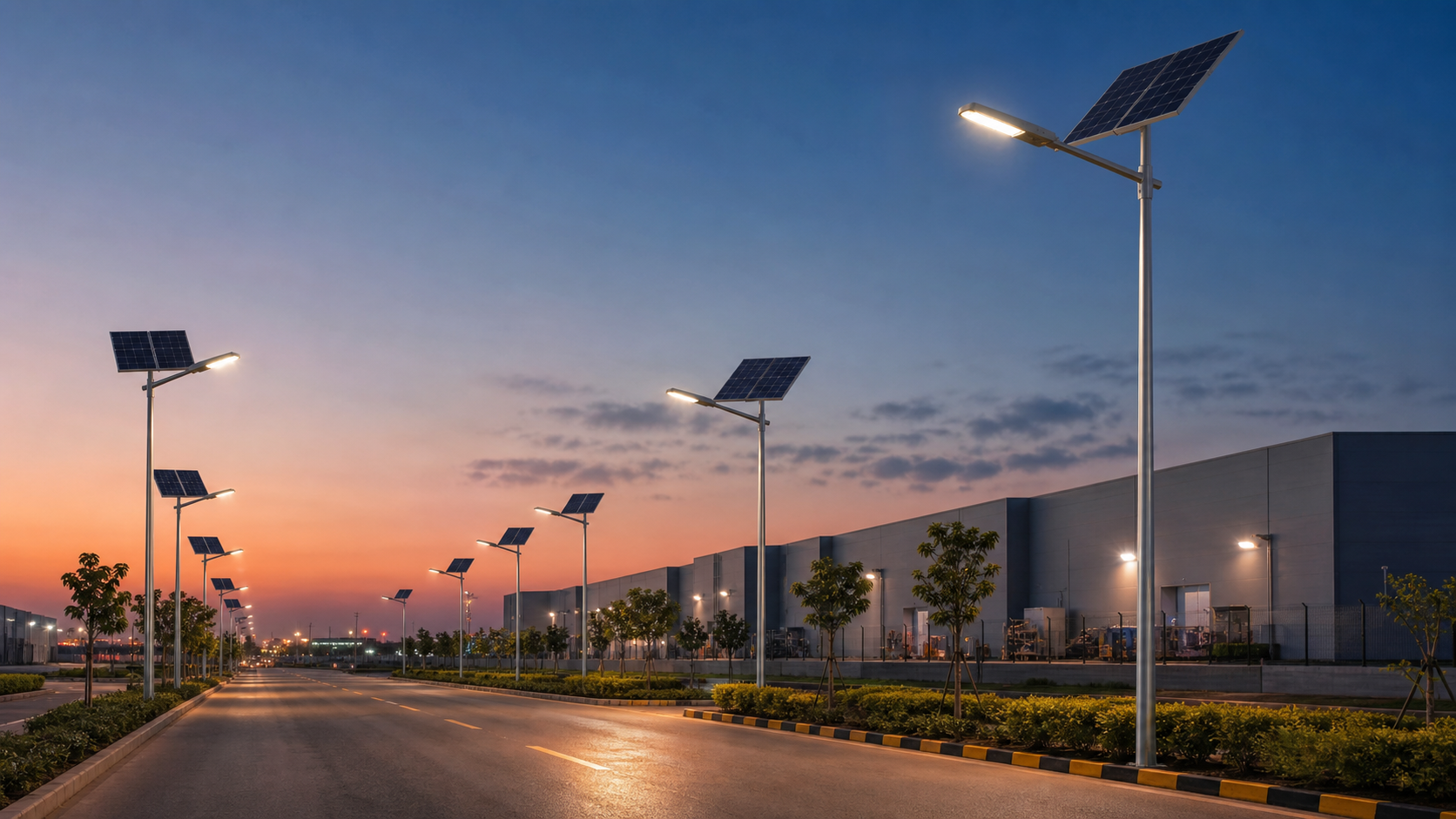
Before requesting a factory quotation, prepare the project location, road width, pole height, pole spacing, desired working hours, rainy-day autonomy target, voltage preference, installation environment, packing requirements, quantity, and target delivery schedule.
Ask the supplier for product photos, datasheets, installation instructions, carton marks, spare parts, and model consistency for repeat orders. Factory direct LED lighting support is useful when buyers need stable specifications across multiple industrial zones or phased construction schedules.
The first mistake is choosing only by lamp wattage. A solar street light system depends on the balance between LED load, battery capacity, panel size, controller settings, optics, and local charging conditions.
The second mistake is ignoring shading. A good fixture will still underperform if the solar panel is shaded for key hours of the day.
The third mistake is selecting low-cost fixtures without checking serviceability. For B2B projects, spare batteries, brackets, controllers, and technical support can matter as much as the initial unit price.
Common applications include internal roads, logistics yards, parking areas, perimeter roads, guardhouse entrances, warehouse access lanes, and remote service roads.
IP65 is a practical baseline for many outdoor projects, but buyers should also check sealing design, cable entry, bracket strength, heat management, and installation details.
Compare LED wattage, panel power, battery capacity, autonomy design, controller settings, housing material, optics, pole recommendation, warranty, packing, and spare-part support.
They can be designed for rainy-season use, but autonomy depends on panel sizing, battery capacity, local sunlight, dimming program, and actual nightly operating hours.
Factory direct support can help importers and contractors keep model selection, packing, documentation, spare parts, and repeat-order communication consistent.
A solar street light for industrial parks should be selected as a complete outdoor lighting system, not as a single lamp. Buyers need balanced solar charging, battery autonomy, IP65 construction, controlled optics, stable mounting, and supplier support for repeat B2B projects.
If you are sourcing solar LED street lights for industrial parks, logistics roads, factory areas, or perimeter lighting in Southeast Asia, the Philippines, the UAE, Saudi Arabia, or the Middle East, contact Guangzhou Vantone Science & Technology Co., Ltd. for factory direct model selection and B2B quotation support.
